
Public Health Update: Meningitis Cases in Kent
We understand that recent reports about meningitis cases in Kent may be causing concern for some of our patients. We would like to share the latest information, explain the current advice, and offer reassurance that the risk to our local community remains very low.
Current situation
The UK Health Security Agency (UKHSA) is managing a localised outbreak of invasive meningococcal disease in Kent.
Although meningococcal disease is serious, it is also rare, and public health teams have taken swift action to help prevent further spread.
At present:
- there is no advice for the general public to take extra precautions
- you do not need to contact the surgery for preventative antibiotics
- there are no changes to the routine NHS vaccination programme
If you are directly affected, UKHSA will contact you.
What is meningitis?
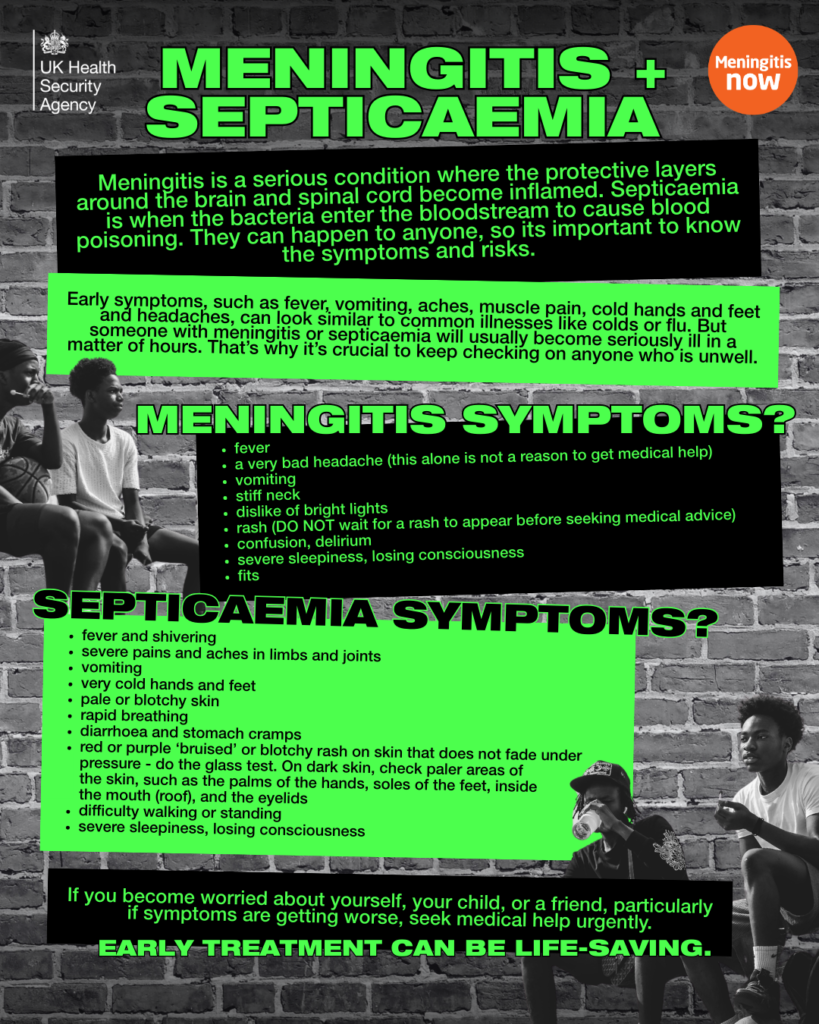
Meningitis is an infection that causes inflammation of the protective lining around the brain and spinal cord. It can be caused by viruses or bacteria.
Viral meningitis is more common and is usually less serious. Bacterial meningitis is rarer, but it can become very serious very quickly and needs urgent medical treatment.
It is most commonly seen in:
- babies and young children
- teenagers and young adults
- people living, studying, or socialising in close-contact settings
Antibiotics and vaccinations
You may have heard that antibiotics are being offered in relation to the Kent cases. These are only being given to people identified through public health contact tracing, such as close contacts of confirmed cases or people linked to specific settings.
Routine NHS vaccines remain the best protection against some causes of meningitis and septicaemia, including:
- MenB vaccine for babies
- MenACWY vaccine for teenagers
- 6-in-1 vaccine
- Pneumococcal vaccine
- Hib/MenC vaccine
- MMR vaccine
There are currently no plans to extend the MenB vaccine programme, so there is no need to contact the surgery to request it outside the usual NHS schedule.
Answers to common questions
Can meningitis be prevented?
Several NHS vaccines help protect against certain types of meningitis and septicaemia. These are offered routinely at different ages, including in infancy, childhood, adolescence, and later life.
Am I protected against MenB by the MenACWY vaccine?
No. The MenB vaccine is separate from the MenACWY vaccine.
The MenB vaccine was added to the routine NHS infant immunisation schedule in 2015. This means that teenagers and young adults born before 1 May 2015 will not have received MenB vaccination as part of the routine programme.
What should I do if I have missed a vaccine?
It is important to have vaccinations when offered, or as soon as possible afterwards.
- Children who missed MenB doses may still be able to receive them free of charge before their second birthday
- Missed MMR doses can be given at any age
- Students under 25 who missed MenACWY can still receive it free of charge through their GP
This is especially important before starting university or college. International students under 25 are also eligible for these routine vaccines.
There is no NHS catch-up programme for MenB for people born before 1 May 2015.
Can I get the MenB vaccine privately?
Yes. MenB vaccination may be available privately through pharmacies, private GP services, or travel clinics. For people over the age of 2, the course usually involves 2 doses.
However, the MenB vaccine does not protect against all MenB strains, so it is still important to know the signs and symptoms of meningitis.
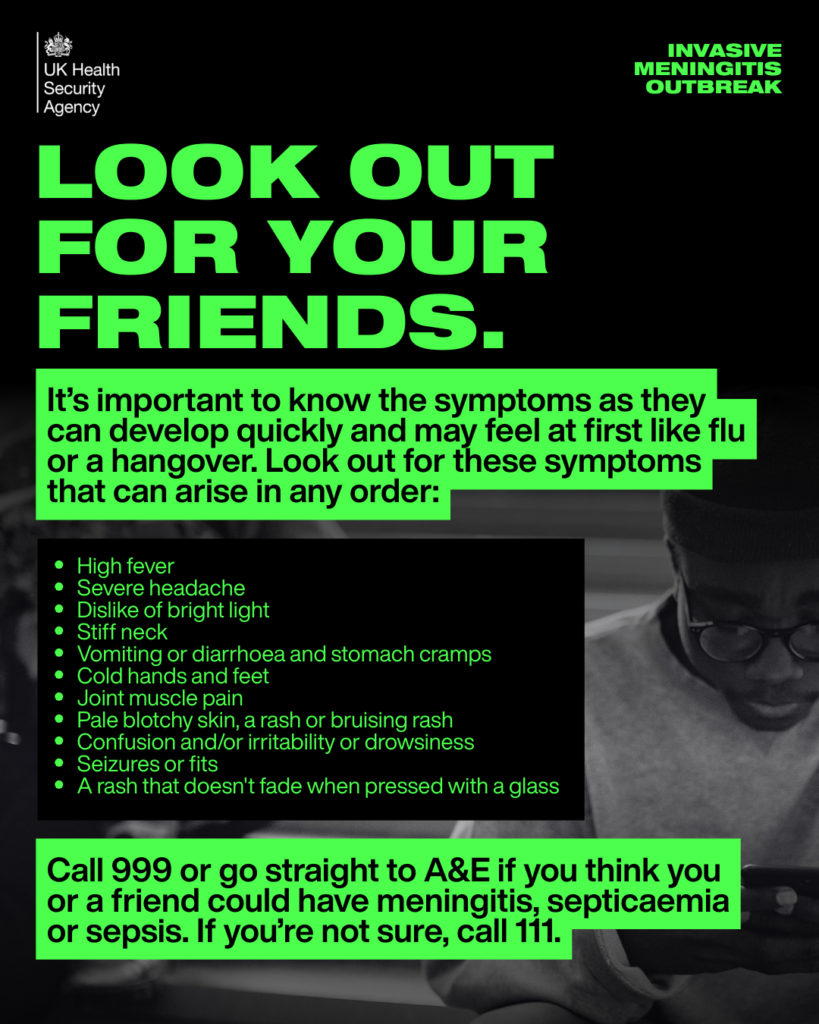
Meningitis – Symptoms to watch for
Symptoms can appear suddenly and may not all happen at once.
Please seek urgent medical help if you or a loved one develops:
- high temperature
- severe headache
- stiff neck
- vomiting
- drowsiness or confusion
- cold hands or feet
- muscle or joint pain
- sensitivity to bright lights
- a rash that does not fade when pressed
What to do if you are worried
Always trust your instincts. Do not wait for a rash to appear or for every symptom to develop.
- Call 999 or go to A&E immediately if you suspect meningitis or sepsis
- Contact NHS 111 or the surgery urgently if you are worried and need advice
Reassurance for patients
We would like to reassure our patients that this is a localised outbreak and that the overall risk remains very low. Public health teams are monitoring the situation closely and measures are already in place.
We will continue to follow national guidance and share any important updates if advice changes.